The nudges framework: one system instead of a dozen one-off banners
Teams were shipping nudges one at a time, and each new one competed with the last. I paused feature delivery to build a shared framework first, trading short-term velocity for results that compound across the funnel.
CompanyTata CLiQ Mall
My roleDesign lead
TouchpointsPLP, PDP, wishlist, cart, homepage
PlatformsMobile and desktop
1.9×
PLP → PDP click-through
+27%
cart-addition rate
+35%
conversion on the mobile Categories tab, with 60% less drop-off
Context
A dozen banners, no shared logic
Individual teams kept shipping one-off nudges (cart reminders, low-stock flags, filter prompts) with no shared logic. The result was visual noise and duplicated engineering effort.
The decision
Keep shipping, or stop and build the system?
The fork
Keep shipping nudges case by case as teams requested them, or pause feature delivery to build a reusable, configurable nudges framework first?
Option A
Keep shipping nudges on request
Case by case, as teams asked for them.
Option B · my call
Build the framework first
Reusable and configurable, at the cost of short-term feature velocity.
Why this, not that
One-off nudges were already hitting diminishing returns
The one-off approach was already showing diminishing returns. Each new nudge type competed with the last for attention instead of compounding.
A shared framework let us reason about frequency, placement and hierarchy across the whole funnel, instead of feature by feature.
The system
One framework, four kinds of nudge
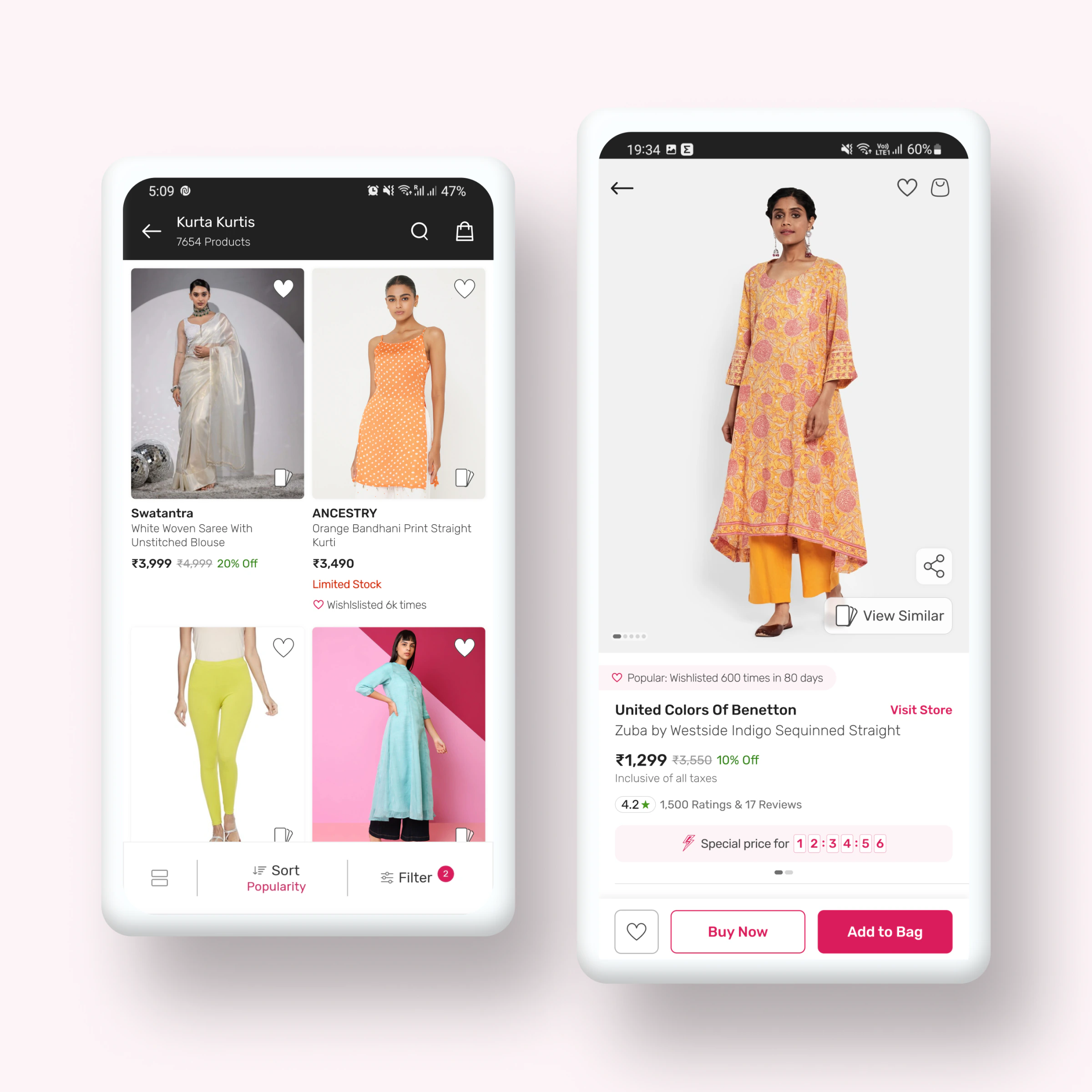
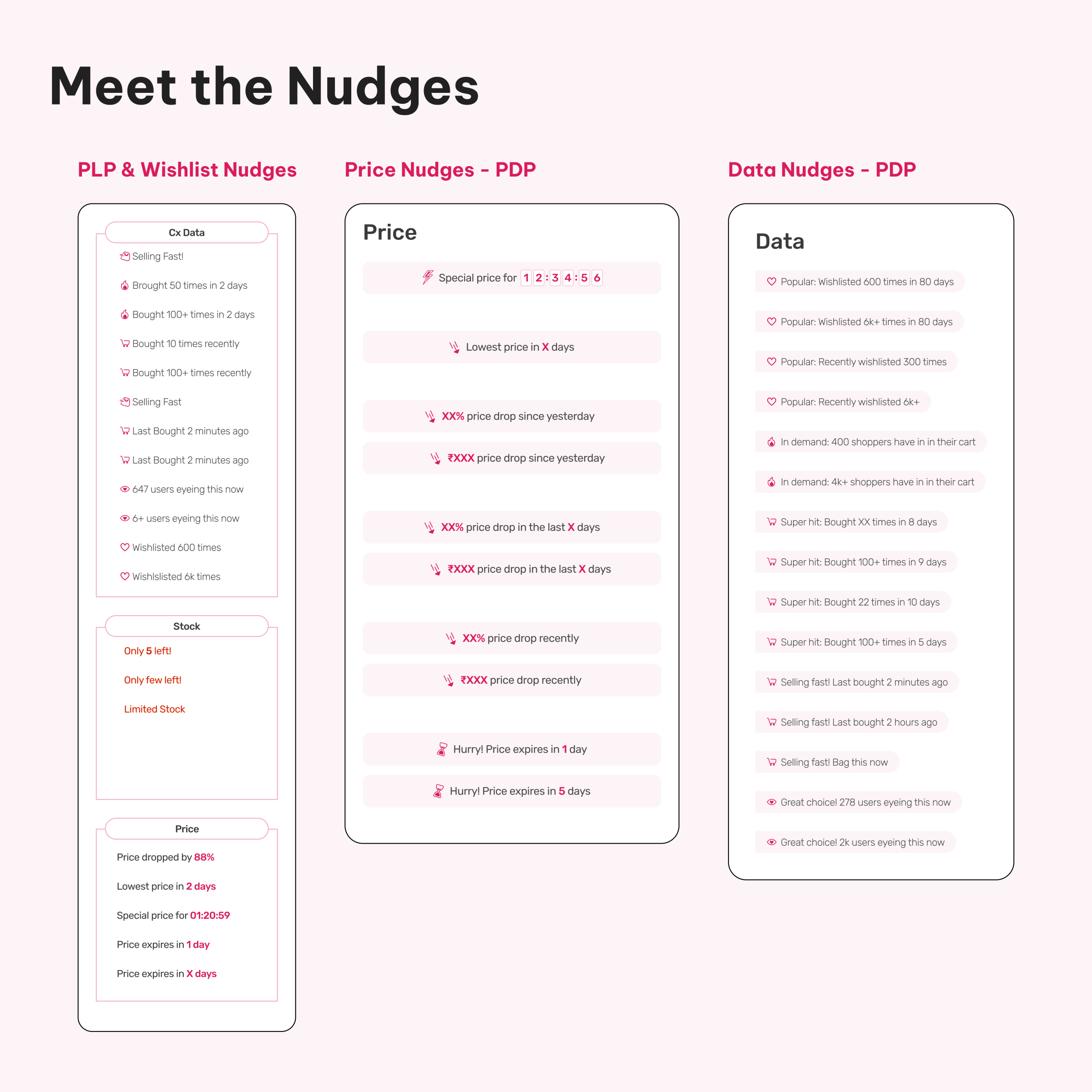
I designed a complete nudges framework to show contextual price, stock, customer-data and offer nudges across PLP, PDP, wishlist, cart and even the homepage, on mobile and desktop.
Extensively benchmarked the competition to work out how best to build the framework for our requirements
Optimised the UX copy to cover every possible nudge case on every touchpoint
Struck a balance between nudge discoverability and efficient use of space on PLP and PDP
Price nudges
Stock nudges
Customer data nudges
Offer nudges
The nudges framework across PLP, PDP and wishlist.
Same thinking, across the funnel
Behaviour systems beyond nudges
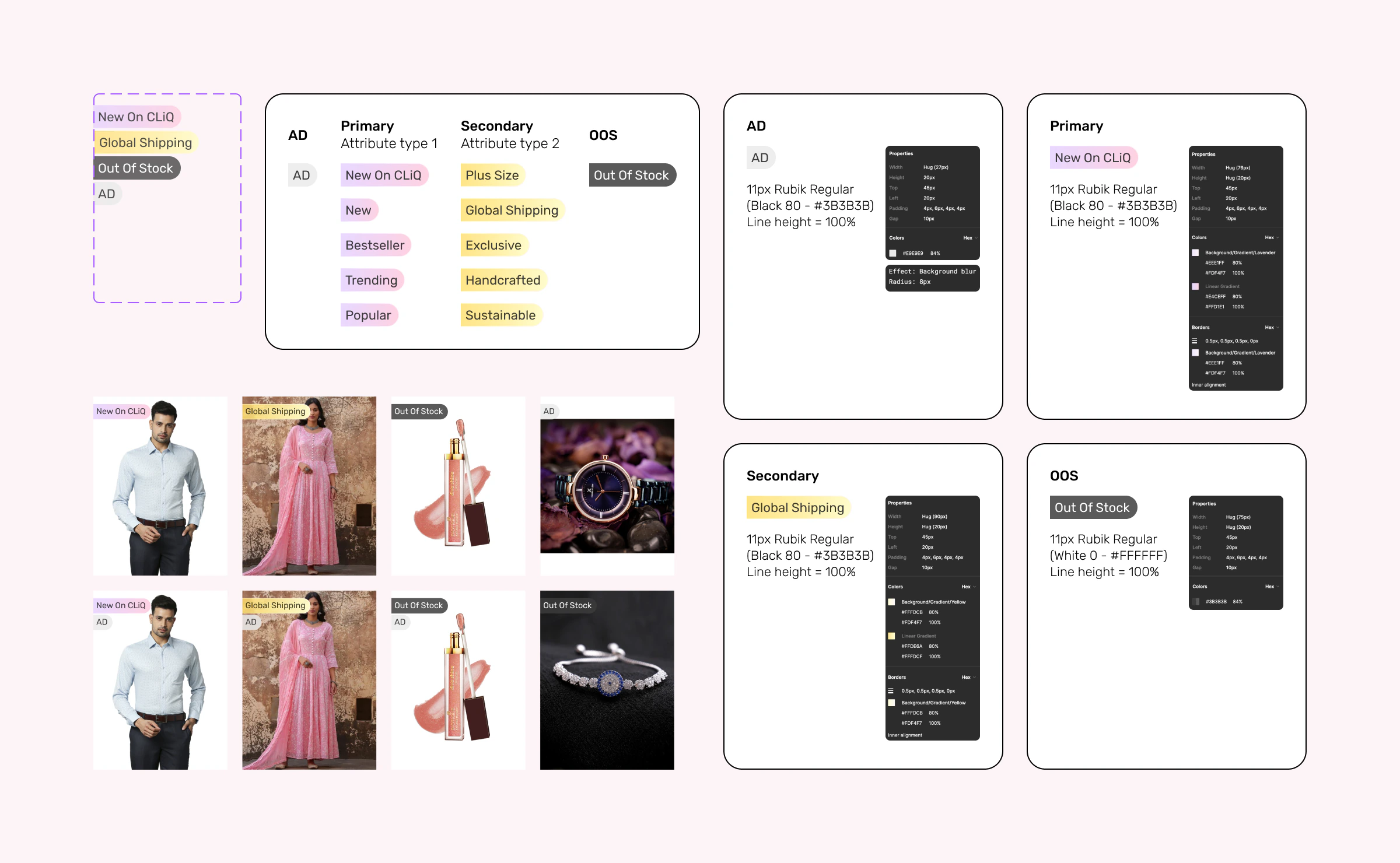
Tags framework
Tags that carry meaning again
Tags on CLiQ weren’t logic-driven and were overused in places. I built a framework with four types: primary (logic-driven), secondary (configurable attributes), out of stock, and ad (for promoted listings).
Progressive filters
Filters that adapt to what you pick
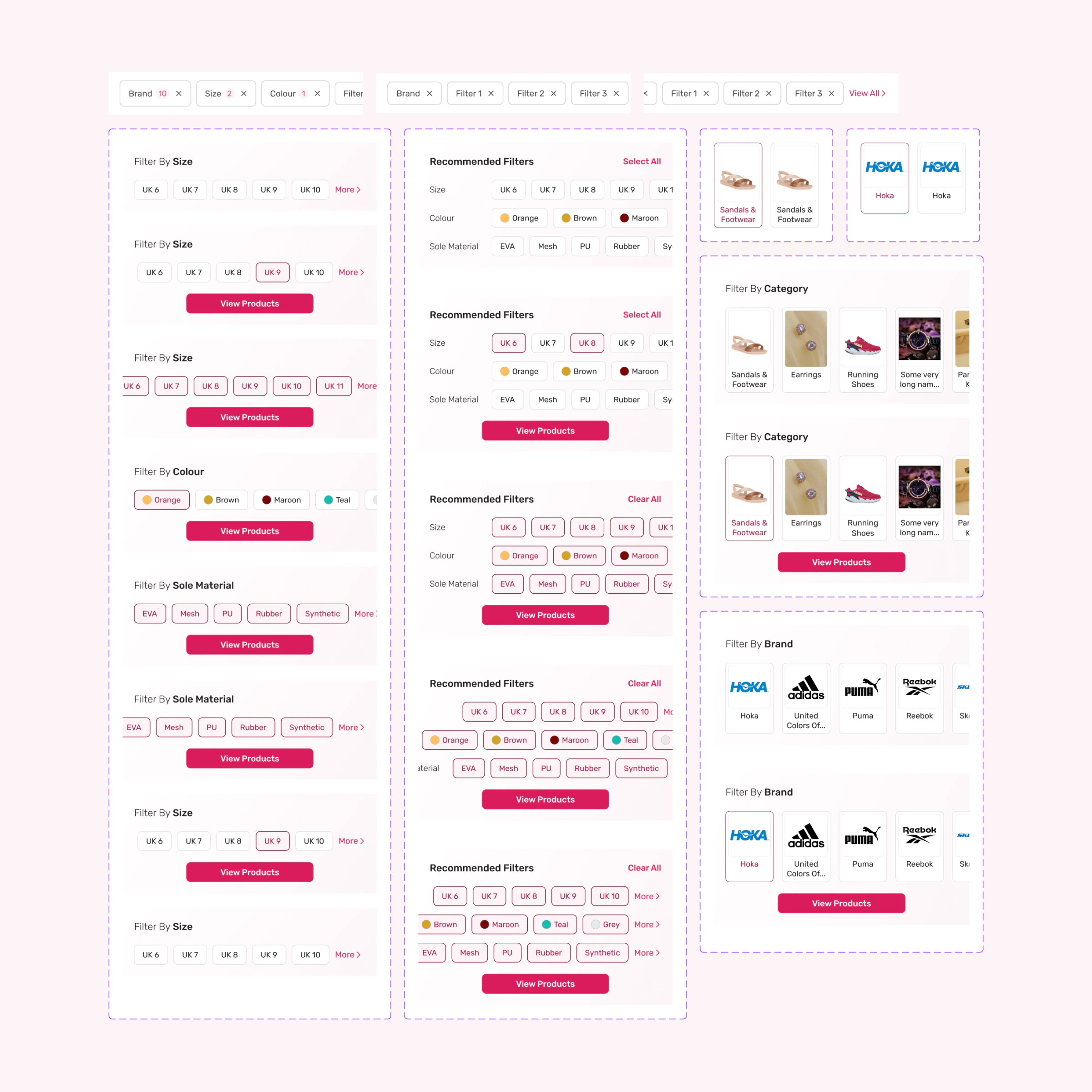
Logic-driven progressive filters on the PLP adapt to each selection, and are more contextual than a filters menu. We rolled out brand, category, colour, size and discount filters.
Mobile Categories tab
The same logic on the Categories tab
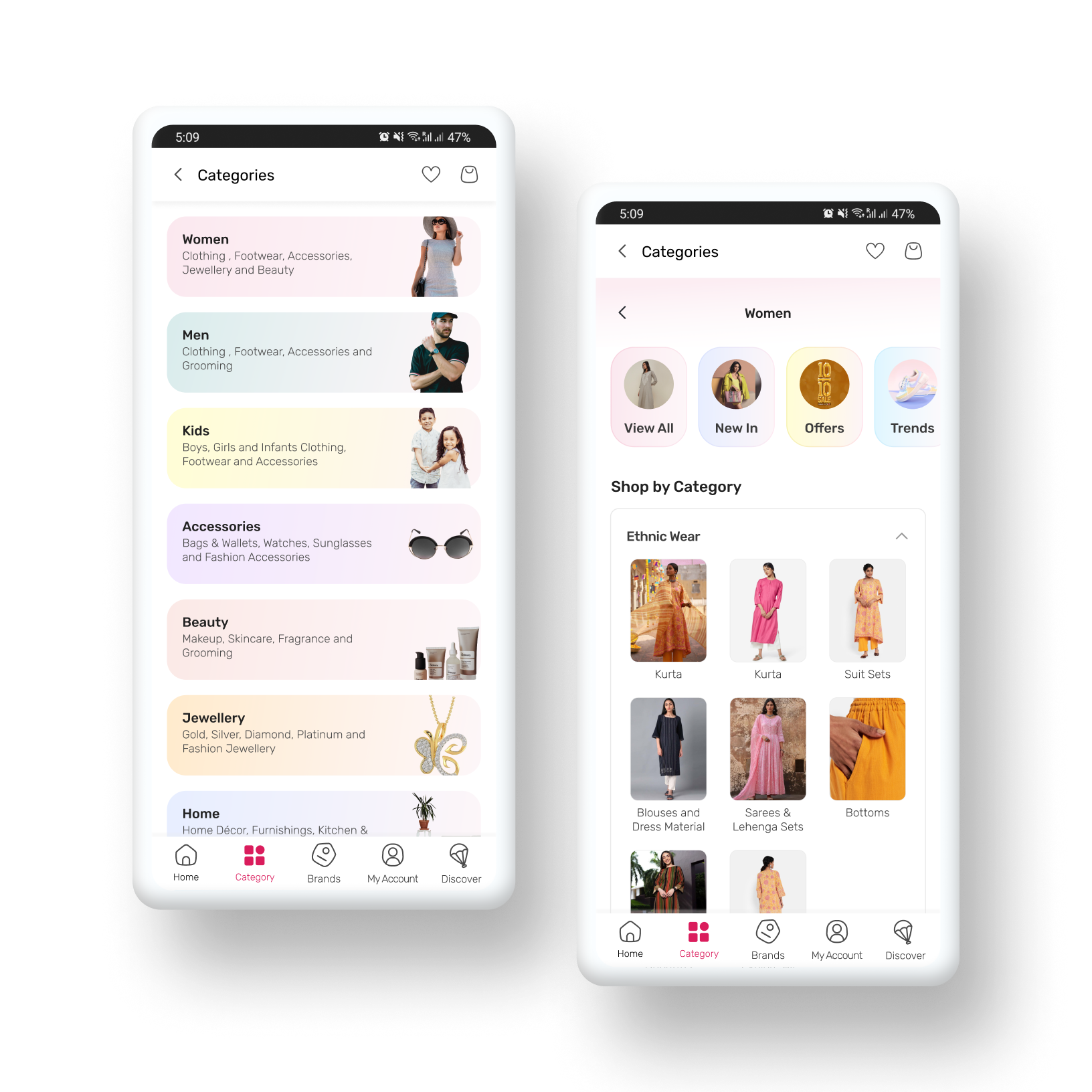
Applied to the Categories tab on mobile, the framework moved both conversion and drop-off.
+35% conversion
−60% drop-off
Progressive filters on the PLP, and the revamped mobile Categories tab.
The tags framework.
What happened
Results that compounded
In less than six weeks after launching price, stock and customer-data nudges:
1.9× PLP → PDP click-through
2.8× PV/V
+27% cart-addition rate
3.2× better conversion rate
The framework also lifted filter usage by 29%, with a 5% CTR lift. On the mobile Categories tab, conversion rose 35% and drop-off fell 60%.
What I’d argue
Most design-systems work stops at components. The nudges framework is a design system for behaviour, not just visuals, and that’s the harder, less-discussed half of systems thinking.